

 en
 Español


 +86-18052418148
+86-0512-66242257
 daxuezhang@hechengfeng.com

Content
Buying reusable logistics containers looks simple until the second or third year of service, when cracks appear at the corners, lids no longer sit flat, and the anti-static performance you paid for has quietly faded. By then the real cost of a poor manufacturer choice becomes visible: replacement purchases, line stoppages, rejected shipments, and a container fleet that no longer stacks the way it was designed to.
Choosing a manufacturer is therefore less about picking an item from a catalog and more about choosing a partner whose tooling, tolerances, and material discipline will survive daily handling. Below is how we usually walk customers through that decision, based on what we have learned producing reusable plastic containers since 2013.
Manufacturers describe containers by type and size. Your operation, however, is defined by movement. Before requesting quotes, write down what actually happens to a box from the moment it is loaded until it returns empty. The answers narrow the supplier list far faster than a price comparison.
A box that is handled ten times per shift at a production line has different requirements from one that sits on a pallet for three weeks. For line-side replenishment, a container with a workable label holder and predictable stacking height often outperforms a heavier, stronger box that slows operators down. That kind of fit is what you should be shopping for.
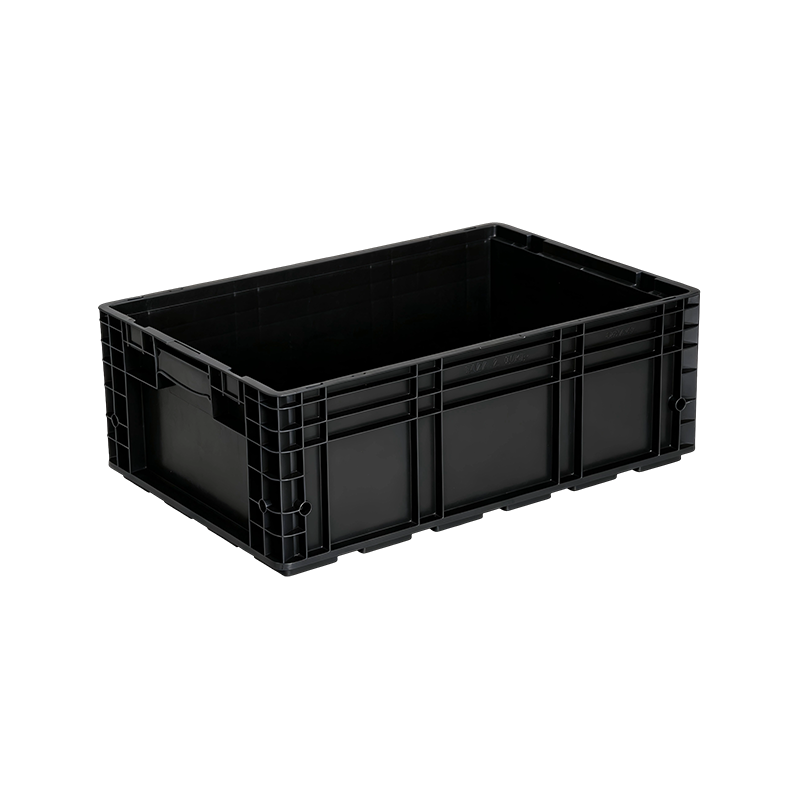
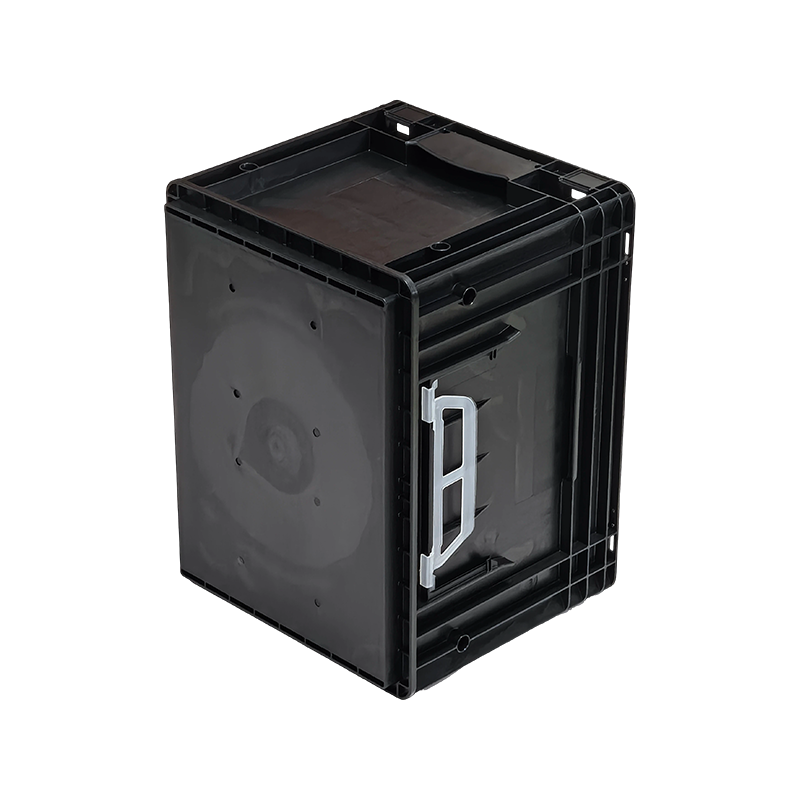 ESD-RL-KLT4080 Antistatic KLT Turnover BoxLine-side container with label-holder option, predictable stacking, and KLT compatibility for automated handling; check its ESD resistivity range and accessory fit.View Product →
A catalog page tells you what a factory can mold. It does not tell you whether the range covers the way your plant actually moves material. A useful check is to list every point where a container changes hands — receiving, inspection, line-side, sub-assembly, finished goods, return transport — and confirm the manufacturer offers a matching format for each, including the lids and pallets that close the loop. A supplier who covers only one format well will leave you running two fleets that refuse to stack together.
| Container family | Typical use | What to verify |
|---|---|---|
| ESD C-KLT | Heavy or palletized loads, automotive parts transport | Base rigidity, stack load rating, antistatic performance after repeated handling |
| ESD M-KLT | Workshop and warehouse stacking for general parts | Dimensional consistency, stacking stability, matching lids |
| ESD R-KLT | Workshop parts circulation, oil-resistant duties | Wall thickness, rib design, chemical resistance |
| ESD RL-KLT | Line-side handling, labeling points | Impact resistance, label holder fit, ergonomics |
| KLT lids | Dust, moisture, and static protection in transit and storage | Seal quality, anti-slip stacking, tolerance against the box |
| Pallets and accessories | Movement between cells, storage, and shipping | Compatibility with the container footprint and handling equipment |
Lids are usually treated as an afterthought and ordered last, which is why they are the most common source of irritation in a recycling loop. An ill-fitting cover slides during transport, traps condensation, or loses its anti-static property at a different rate from the box beneath it. Ask how the manufacturer controls the fit between body and cover, whether the lid is molded from the same material family, and whether it is designed to stack when closed.
For shipments that must arrive dry and undisturbed, a moisture-sealed cover changes the risk profile of the whole journey rather than adding a small convenience. It is worth specifying the environment — dock areas, unheated trailers, coastal humidity — so the supplier can recommend the right cover construction instead of the cheapest one.
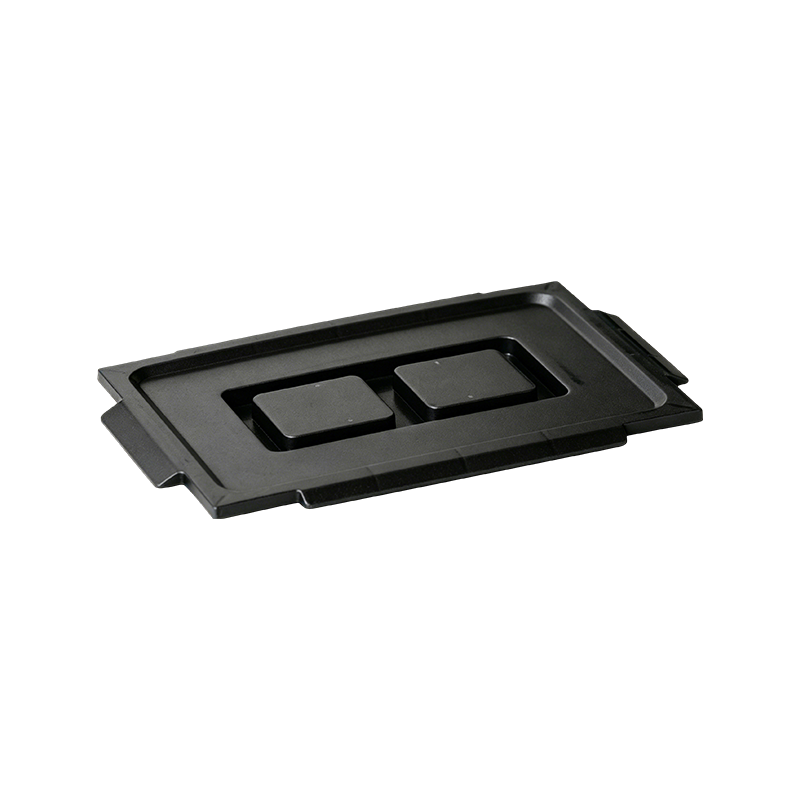
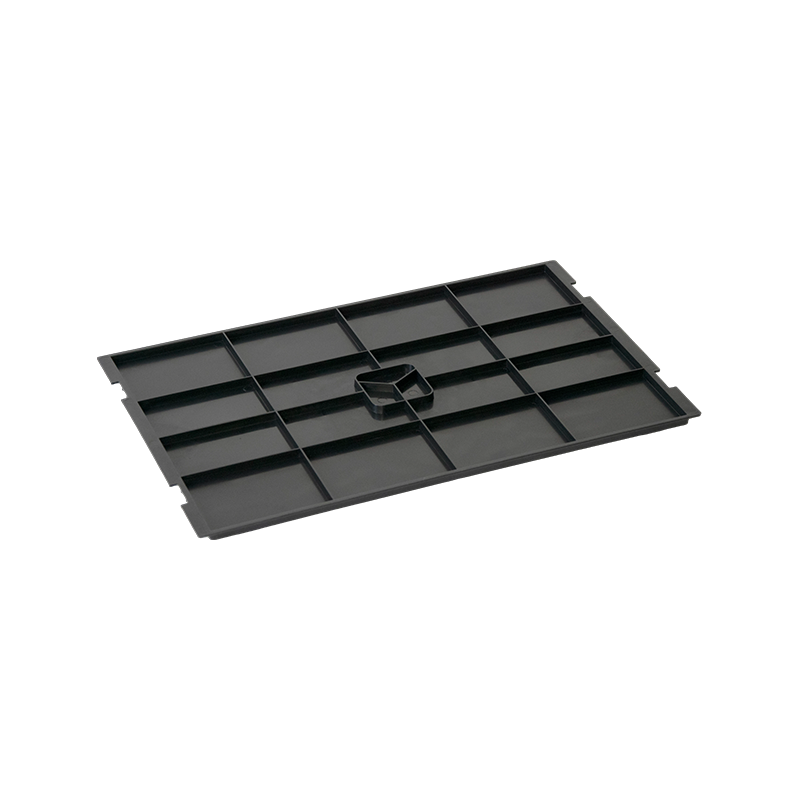 ESD KLT-D61 Moisture-Proof Sealed Crate LidConductive KLT lid for moisture and dust protection, with customizable resistivity and VDA-compatible snap-fit; verify container compatibility and sealing needs for humid shipments.View Product →
Words like "antistatic" and "conductive" appear on almost every industrial container page and mean quite different things. Conductive materials normally sit in a much lower surface resistance band than dissipative ones, and the correct choice depends on what you are protecting and how the container is grounded in use. A manufacturer should be able to state the target range, the test method behind it, and how the property behaves over time.
Three questions separate serious suppliers from optimistic ones. First, is the anti-static performance inherent in the compound or applied as a surface treatment that washing will remove? Second, do you receive batch-level test records rather than a single certificate from a prototype? Third, does the same performance apply to the lid, the dividers, and the pallet the box sits on? A container system only works if every element in the loop behaves consistently.
Reusable packaging lives or dies on compatibility. If your conveyors, racking, and existing boxes follow common footprint conventions, the new containers must match them within a tolerance your equipment can absorb. Ask for drawings with nominal dimensions and tolerances, request samples to measure yourself, and confirm stack height under load rather than at rest. A box that is two millimeters out is not a rounding error when it is part of a ten-high stack on a pallet.
Standard formats exist for good reasons: they interchange between suppliers, they work with standard lids, and they keep a fleet coherent when you add capacity later. Customization should solve a specific problem, not replace the discipline of standard sizing.
Where a standard stackable crate fits the flow, the practical test is simple: load it the way your operators will, stack it to your real working height, and check that it still engages with its neighbours.
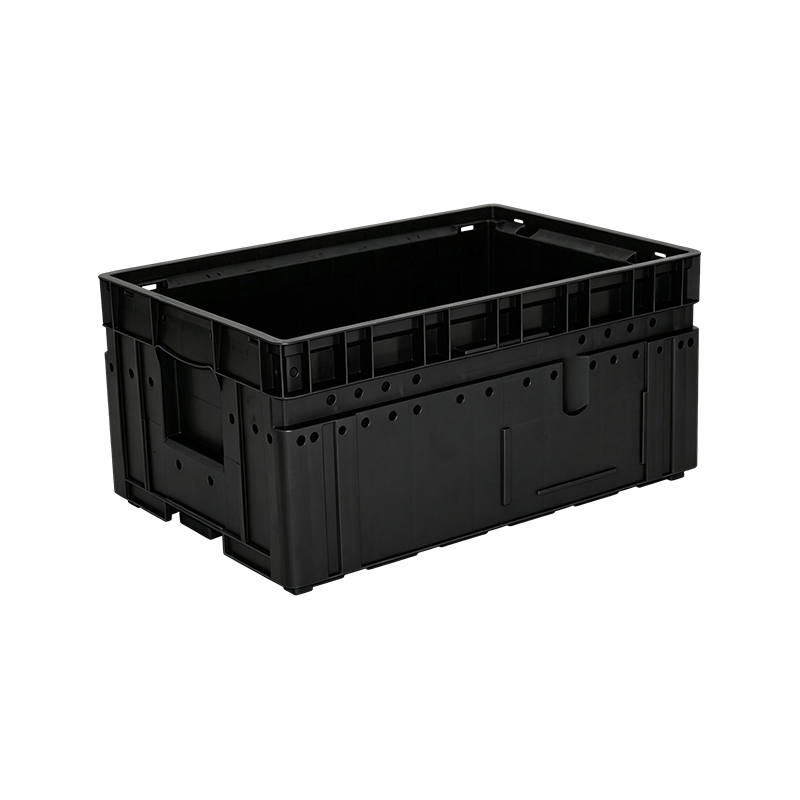
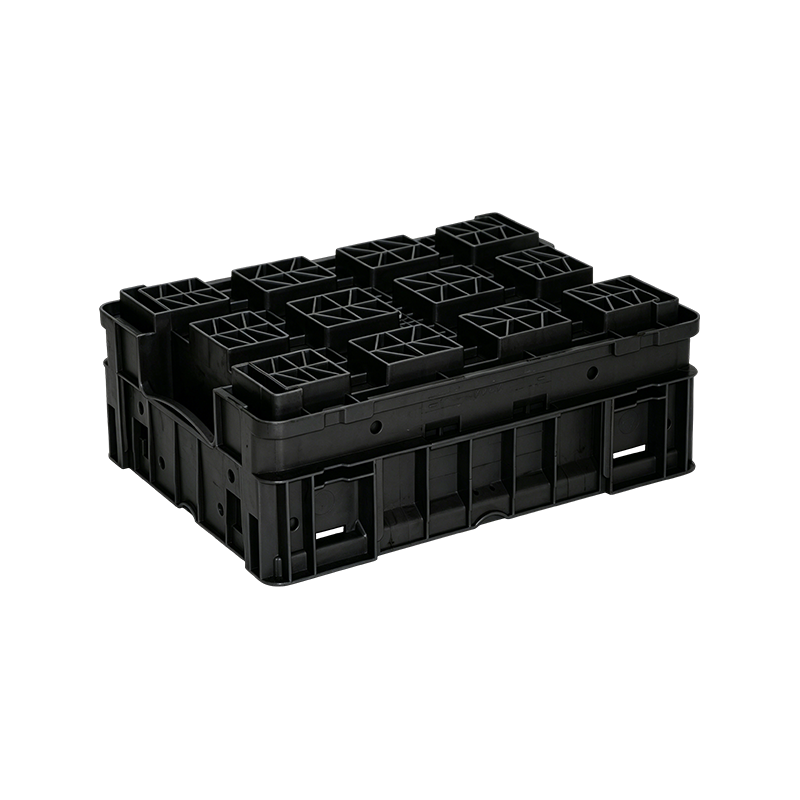 ESD-C-KLT 4314 Anti-Static Stackable KLT CrateStandard stackable ESD crate for component circulation, with reinforced base, locking slots, and customizable resistivity; evaluate it under real load and stacking height before custom tooling.View Product →
At some point a standard container will not fit the part, and you will need a custom mold. This is where the difference between a trader and a manufacturer becomes obvious. Ask who designs the tool, who owns it, how many trial iterations are included, and what happens to the mold if the program ends. Suppliers with genuine in-house mold experience will talk about draft angles, gate placement, and shrinkage long before they discuss price, because those details determine whether the first shot is close to the final part.
It also helps to know who you are actually working with. You can read more about our team's background in mold development and ESD packaging design and judge whether that experience maps onto your project. A supplier who can explain the trade-offs between wall thickness, rigidity, and cycle time is usually a supplier who can also hold a tolerance over years of production.
Two shipments of the same part number should behave identically. In practice, that depends on mold maintenance, regrind ratios, colour masterbatch discipline, and whether anyone actually measures wall thickness and key dimensions between runs. Ask what is checked, how often, and whether records can be shared. Ask how containers are packed for export, since a well-made box can arrive deformed if it was stacked incorrectly in a container.
Delivery questions matter just as much as quality ones: minimum order quantity per size, production lead time for standard items versus new tooling, and availability of matching lids and spare parts after the initial order. A fleet is only as good as its ability to be replenished with identical items a year later.
The cheapest container is rarely the least expensive one. Divide the purchase price by the number of trips you realistically expect before damage, then add return transport, cleaning, and the labour spent sorting a mixed fleet. A slightly pricier box that survives two extra years usually wins that calculation comfortably.
Before you commit, run through this shortlist with each candidate supplier:
Answer those seven questions and the shortlist usually shrinks to one or two names. If you would like a second opinion on your container plan, talk to our team about your fleet — we would rather help you specify the right box once than replace the wrong one three times.
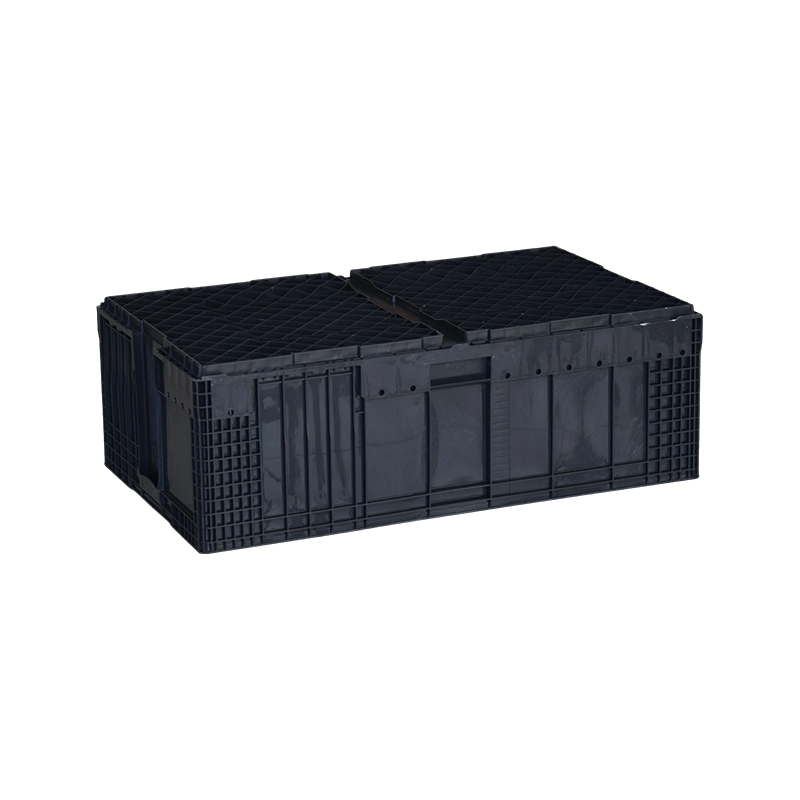
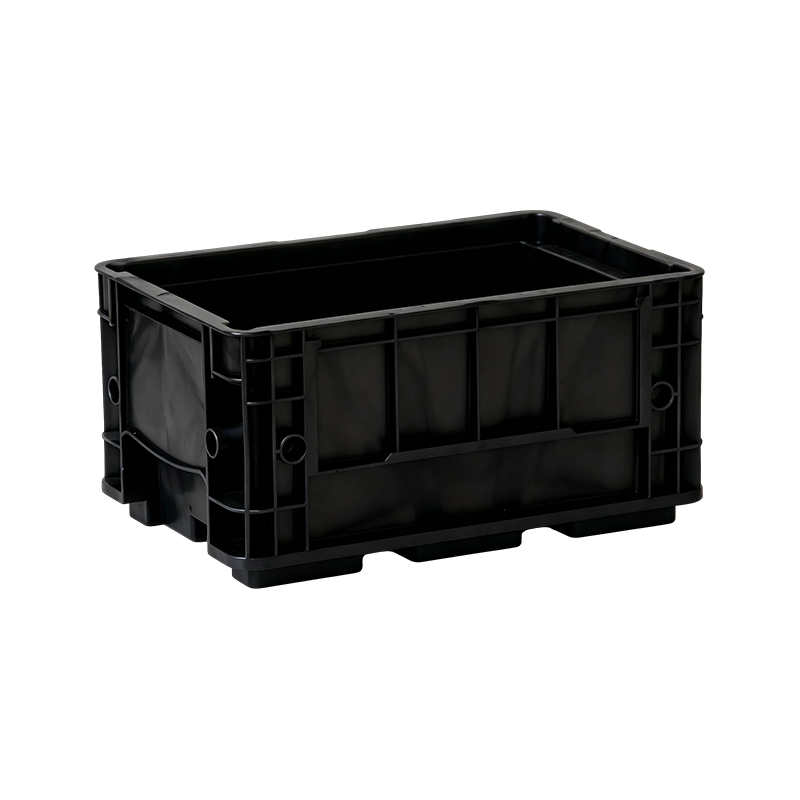 ESD-R-KLT3115 Anti-static Plastic Bins for Workshop Parts Handling & Circulation

Copyright © Suzhou He Cheng Feng Esd Circulation Box Co., Ltd.
All Rights Reserved.Custom Reusable Automotive Plastic Containers Suppliers
