

 en
 Español


 +86-18052418148
+86-0512-66242257
 daxuezhang@hechengfeng.com

Content
Automotive supply chains move a lot of parts through a lot of hands, and the container carrying them is often the least examined decision with the longest consequences. A tray chosen in a hurry can serve a decade of circulation or start cracking within two winters; it can shield a control unit from static discharge or quietly expose it. Because these choices are hard to reverse once racks, truck layouts and line-side stations are built around them, they deserve a structured look rather than a quick catalogue scan. What follows is the sequence of questions we usually work through with automotive customers, from footprint and load through ESD grade, lid design and long-term supply.
A returnable container has to satisfy engineering, logistics and quality at the same time, and those three groups rarely want exactly the same thing. In practice, most automotive programmes converge on a handful of shared requirements:
Miss any one of these and the cost surfaces later, usually as damaged parts, blocked lines or a container fleet retired years before its time. The choices themselves are well understood, and a short list of questions narrows them quickly.
European automotive logistics settled long ago on the KLT concept: a standardised small load carrier that stacks, nests where needed and fits modular racking. Within that concept, letters and prefixes signal differences in wall construction, reinforcement and footprint range. Rather than memorising definitions, it helps to know the role each family usually plays and which details are worth confirming before ordering.
| Family | Typical role | Points to confirm |
|---|---|---|
| C-KLT | Stackable general-purpose crates, including heavy palletised versions for warehousing and parts transport | Base stiffness on conveyors, wall strength at rated load |
| R-KLT | Ribbed and thickened boxes for workshop circulation and denser parts | Rib pattern, oil and coolant resistance where parts arrive wet |
| RL-KLT | Reinforced line-side boxes, often with a label holder or open picking face | Label window size, opening geometry, nesting ratio for returns |
| M-KLT | Metric-footprint containers for workshop and warehouse storage | Rack and shelf grid compatibility, stack height limits |
| Lids | Stackable, sealed, dust-proof or shock-absorbing covers for transit and storage | Interlock with the box below, sealing level, venting needs |
Most selection problems are really footprint problems. Racks, conveyor widths, truck cube and line-side stations are fixed long before anyone chooses a container, so the practical order of work is to start from the space and work back to the part. The familiar footprints, 600 by 400, 400 by 300 and 300 by 200 millimetres, cover the majority of automotive components, and heights are then chosen so that a full container lands on a sensible weight for one person to lift.
Two measurements cause most of the trouble later: internal versus external dimensions, and the usable load rather than the nominal one. A container rated for fifteen kilograms of evenly spread mass behaves differently when a single gearbox housing sits in one corner. On return journeys, nesting ratio decides how many empty containers fit in a truck, which can matter more to total cost than the price of the box itself. For parts that travel between plant and supplier, a palletised design often pays for itself by fitting existing handling equipment rather than requiring new racks.
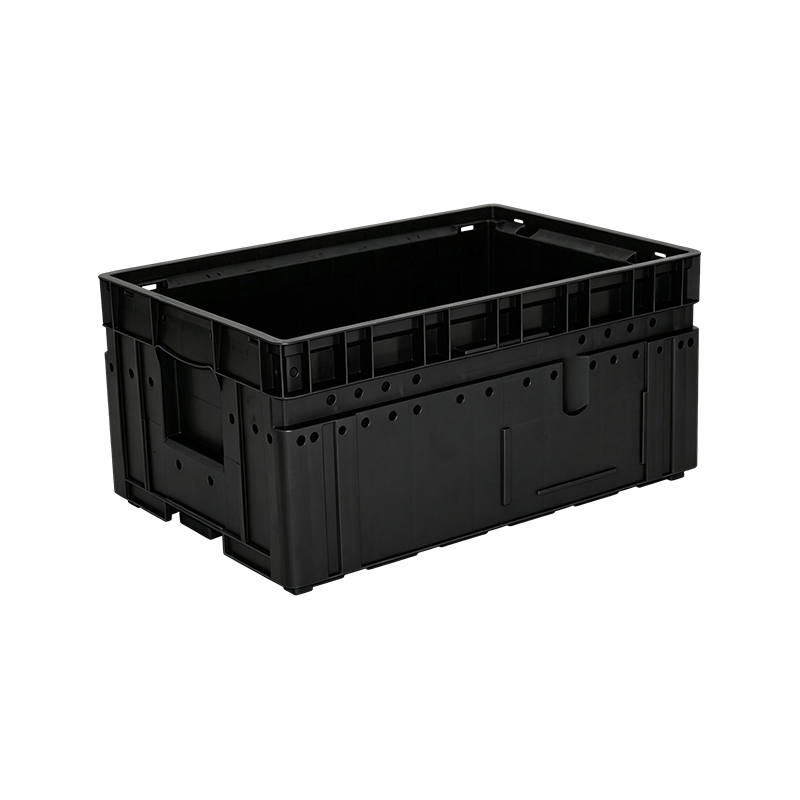
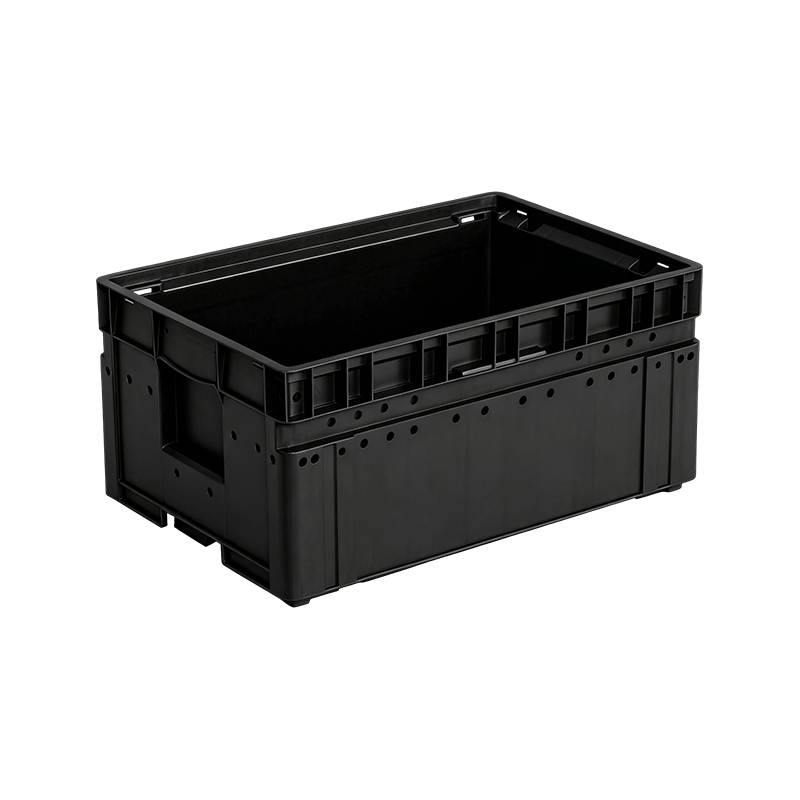 ESD-C-KLT 6428 Conductive Automotive Returnable ContainerA 42.5-litre conductive KLT crate with internal dimensions, 25kg static load and 250kg stacking load, suited to returnable automotive logistics and ESD-controlled handling.View Product →
Static control is where automotive and electronics packaging overlap. A container that generates and holds charge can damage electronic control units, sensors and increasingly the power electronics that sit in every modern vehicle. The fix is not one universal material but the right band of surface resistivity for the parts involved.
| Grade | Surface resistivity | Where it usually fits |
|---|---|---|
| Standard / insulating | Above 1012 ohms | Mechanical parts with no static-sensitive content |
| Antistatic / dissipative | 106 to 109 ohms | Control units, sensors, mixed electronic assemblies |
| Conductive | 103 to 106 ohms | Highly sensitive assemblies and areas where rapid discharge is required |
Two practical notes are worth keeping in mind. First, antistatic performance is a property of the whole container, not just the base, so lids and accessories matter as much as the box. Second, the property has to survive cleaning, abrasion and years of handling; ask how the grade is achieved and how it is verified, not only what the datasheet states on day one.
A container is rarely bought alone. Lids convert an open crate into a closed transport unit, adding dust and moisture protection as well as a stable surface for the next container up the stack. For automotive work, the useful lid variants are usually the stackable antislip type, the water and dust-proof sealed type and the ribbed reinforced type for heavier stacks. Choosing between them comes down to whether the load is exposed to weather, whether the top of the stack must carry weight, and whether condensation is a risk in transit.
Beyond lids, the small parts of a system cause the most day-to-day friction: a label holder that actually holds the label flat, a base that runs cleanly on a roller conveyor, a drain hole that does not become a leak. Pallets and plastic accessories tie the containers to forklifts and automated handling, and they are worth specifying at the same time as the boxes rather than bolted on afterwards.
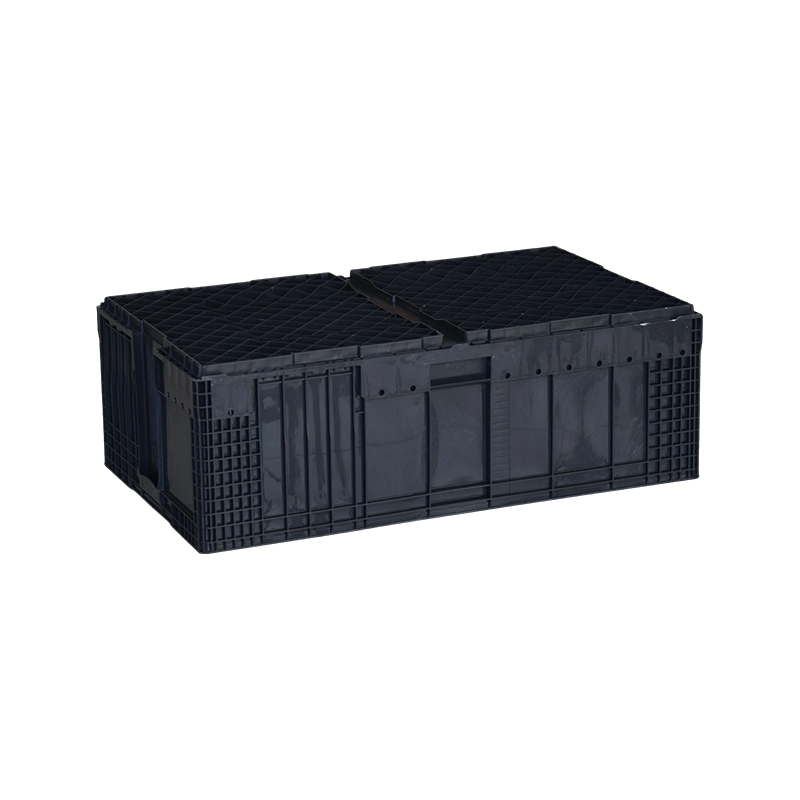
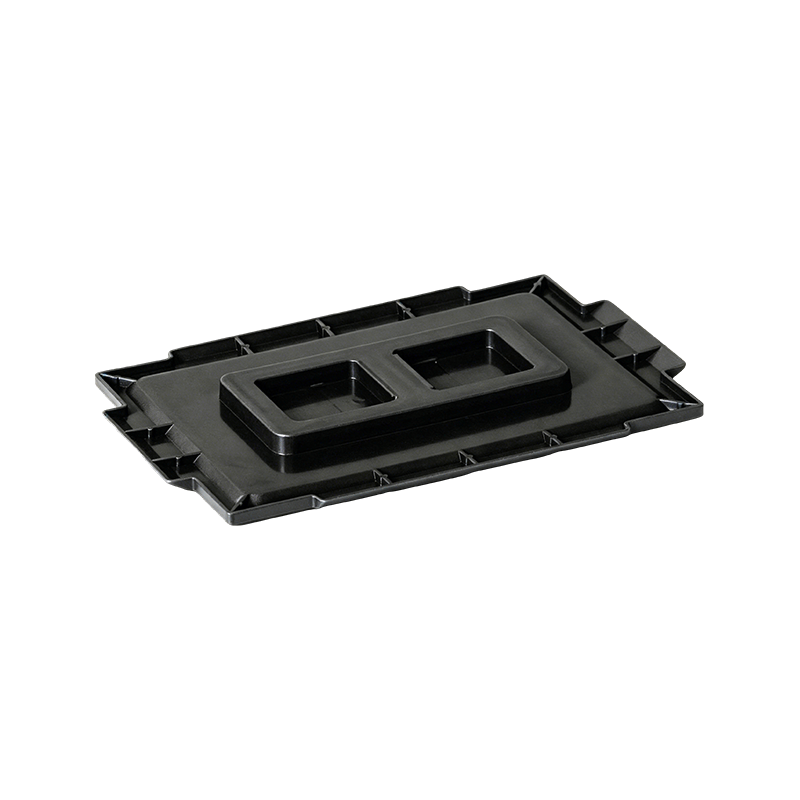 ESD C-KLT-D41 Anti-Static VDA Container LidA conductive PP lid for compatible ESD KLT containers, with flat, dimensionally stable coverage for automated handling and protection of sensitive automotive and electronic parts.View Product →
Stacking is the requirement that quietly separates good containers from cheap ones. A loaded container at the bottom of a four-high stack carries the weight of everything above it, often for weeks, often in a warm warehouse where plastic softens slightly. Ask for the rated stack load with the lid in place, not just the static load of a single box, and check whether the base is designed to spread that load or concentrate it on one corner.
Temperature and chemistry also deserve a mention. Automotive parts travel with oils, coolants and cleaning agents, and wash-down routines vary by plant. A material that resists one solvent may soften in another, so share the actual cleaning process with your supplier instead of assuming a generic automotive grade will cope.
On the line itself, seconds matter. A container should present its parts at a comfortable height, open in a way that lets an operator pick with one hand, and identify its contents without a search. That is why reinforced line-side boxes with label holders remain popular even when simpler crates would technically hold the same components. It is also why the opening geometry, not just the footprint, should be trialled at the actual station.
Traceability is the other half of the story. Barcodes, RFID tags and colour coding all need a place to live, and retrofitting them into a container without a label window tends to end in adhesive labels peeling off in a wash station. Deciding the identification method early costs almost nothing; adding it later costs a fleet-wide rework.
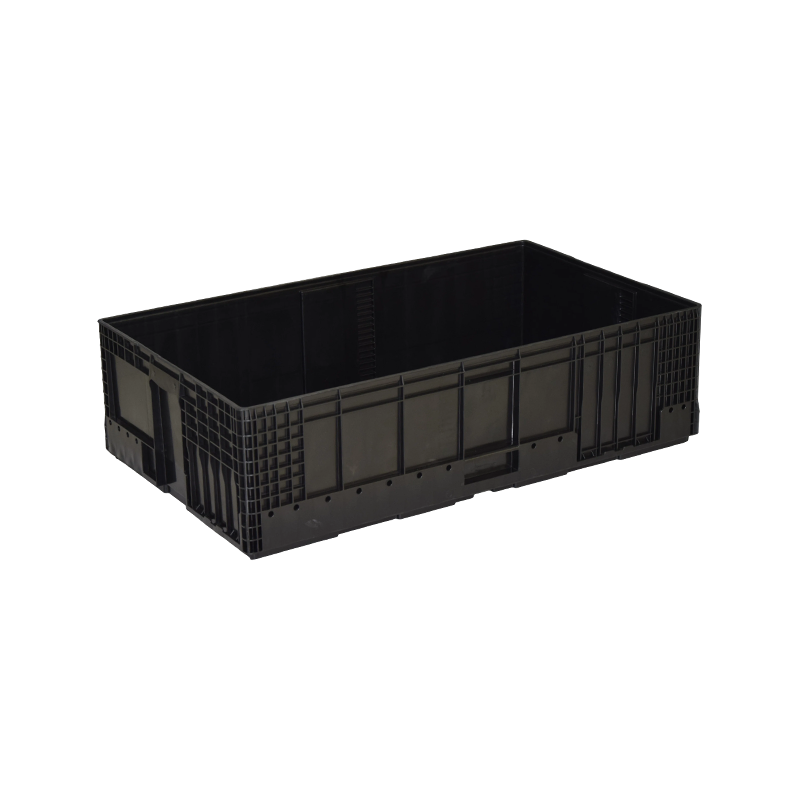
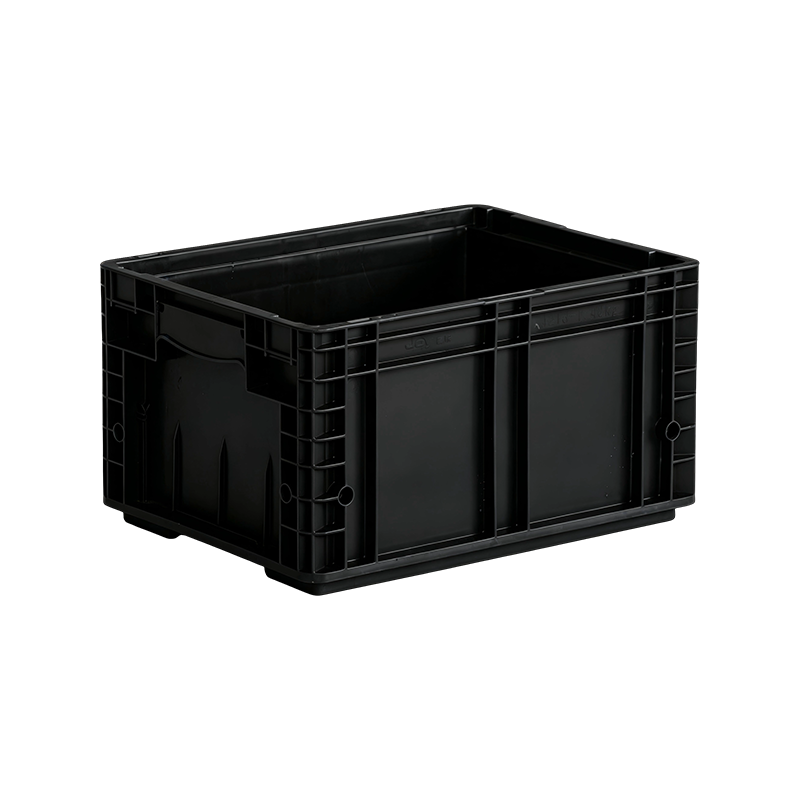 ESD-RL-KLT4013 Antistatic KLT Turnover Box for Automotive ComponentsA 17.5-litre conductive KLT box with optional label holders and inserts, suited to ESD-controlled automotive logistics, automated handling and returnable packaging.View Product →
When a new programme reaches the packaging stage, this is the order of questions that tends to produce a decision everyone can live with:
Most of these questions can be answered in a single site visit or a short video call with the line supervisor present. The pilot loop is the step people are tempted to skip, and usually the one that pays back fastest.
We have been making standardised plastic logistics containers in Suzhou since 2013, and the projects that go smoothly are almost never the ones with the most detailed specification — they are the ones where the container maker saw the actual handling situation, including the awkward corner where a full box has to be turned by hand. Our range covers ESD, conductive and folding circulation boxes, EU and HP standard containers, pallets, lids and plastic accessories, alongside custom mould development when no standard size fits. You can see how these families are applied across industries on our application pages.
For automotive programmes, that usually means working through the checklist above together, sampling one or two containers against real loads, and only then agreeing a fleet. If you are planning a change of packaging or adding a new part to an existing loop, send us the part details and constraints and we will tell you honestly whether a standard container will do the job or whether a custom mould is the better investment.
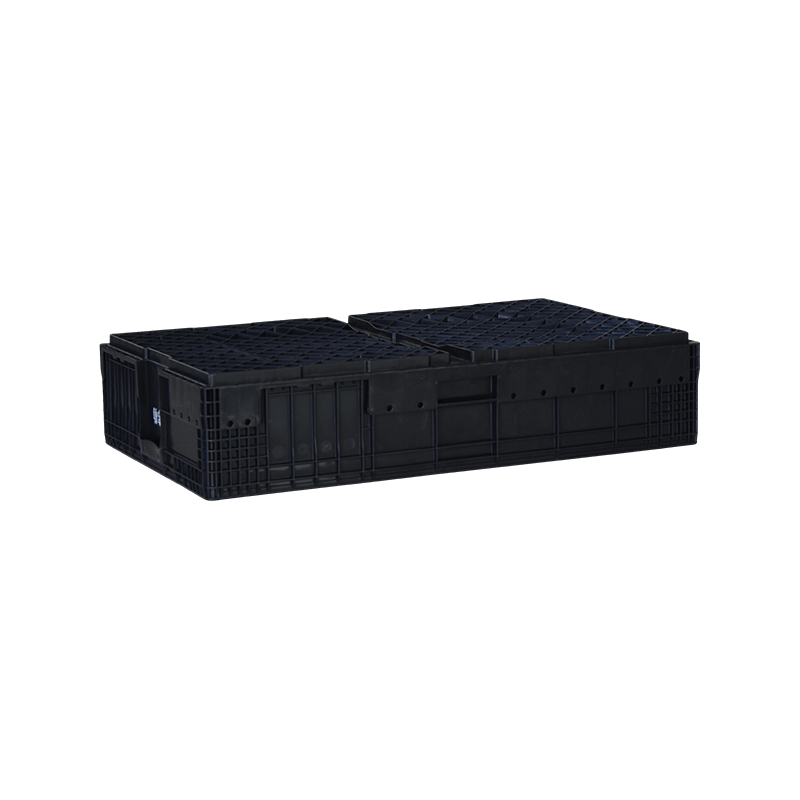
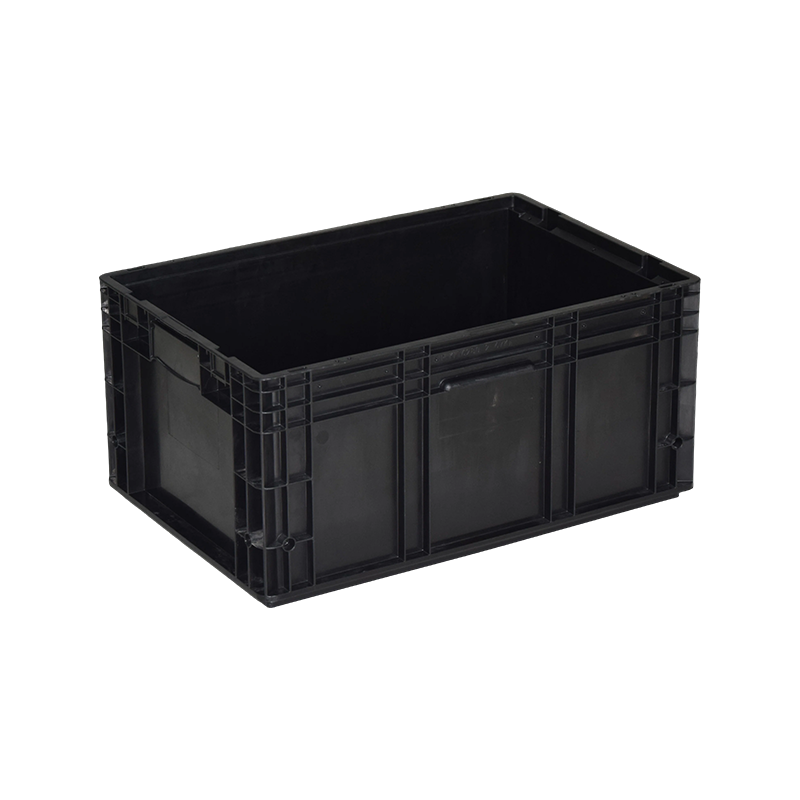
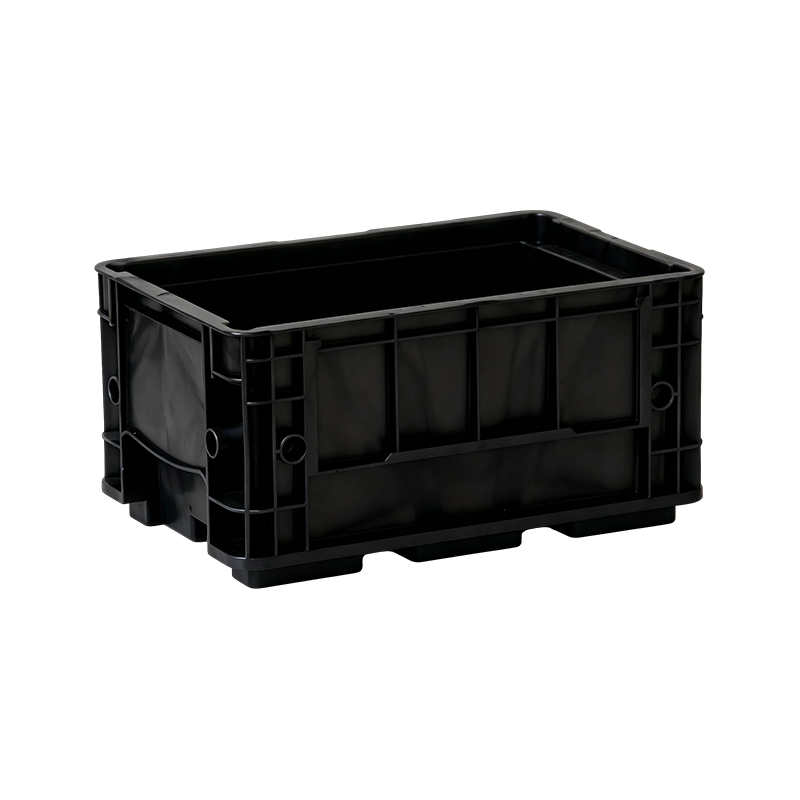 ESD-R-KLT3115 Anti-static Plastic Bins for Workshop Parts Handling & Circulation

Copyright © Suzhou He Cheng Feng Esd Circulation Box Co., Ltd.
All Rights Reserved.Custom Reusable Automotive Plastic Containers Suppliers
