

 en
en
 Español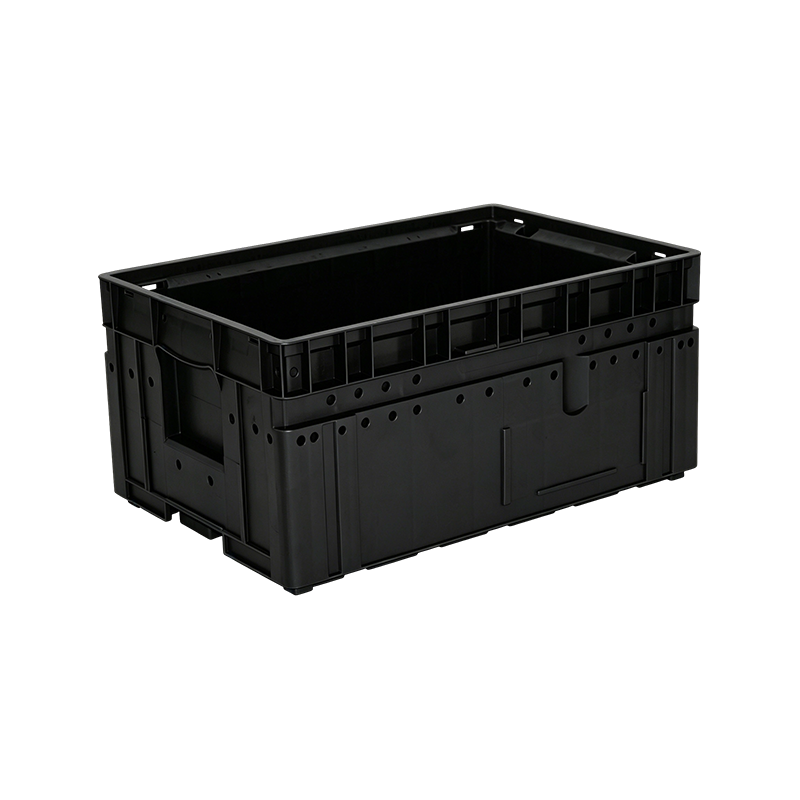


 +86-18052418148
+86-0512-66242257
+86-18052418148
+86-0512-66242257
 daxuezhang@hechengfeng.com

Content
Automotive manufacturing increasingly depends on electronic control units, sensors, power management devices, communication modules, and other components that may be vulnerable to electrostatic discharge. These parts can pass through multiple stages of production, inspection, temporary storage, kitting, and delivery before reaching their final assembly positions.
During these movements, packaging is part of the electrostatic discharge control system. Conventional plastic containers may provide physical protection and convenient handling, but their electrical behavior does not automatically make them suitable for sensitive electronic components. Material selection, grounding procedures, handling practices, and packaging design must work together.
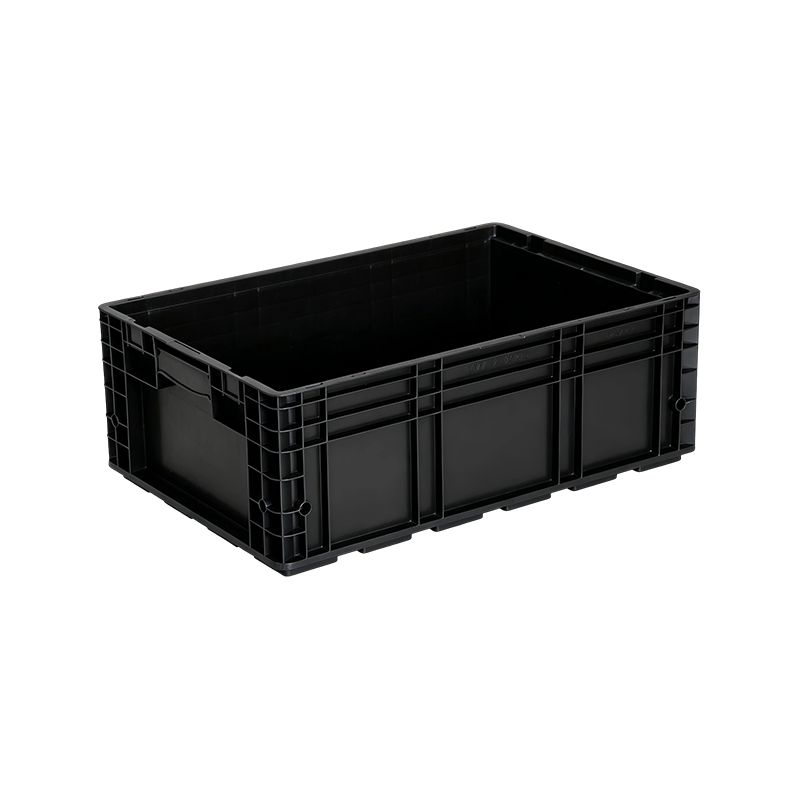
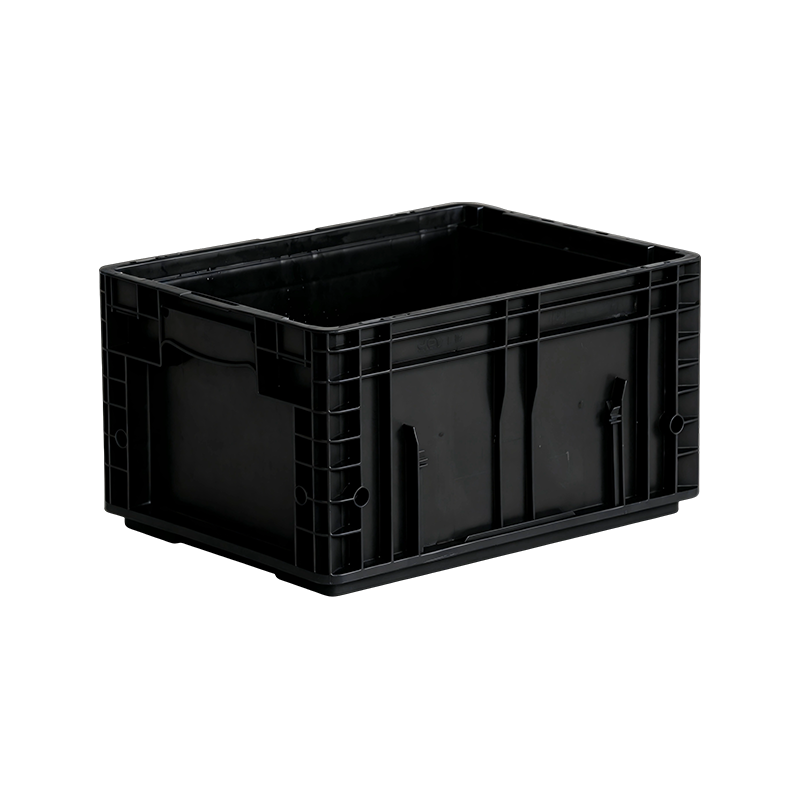
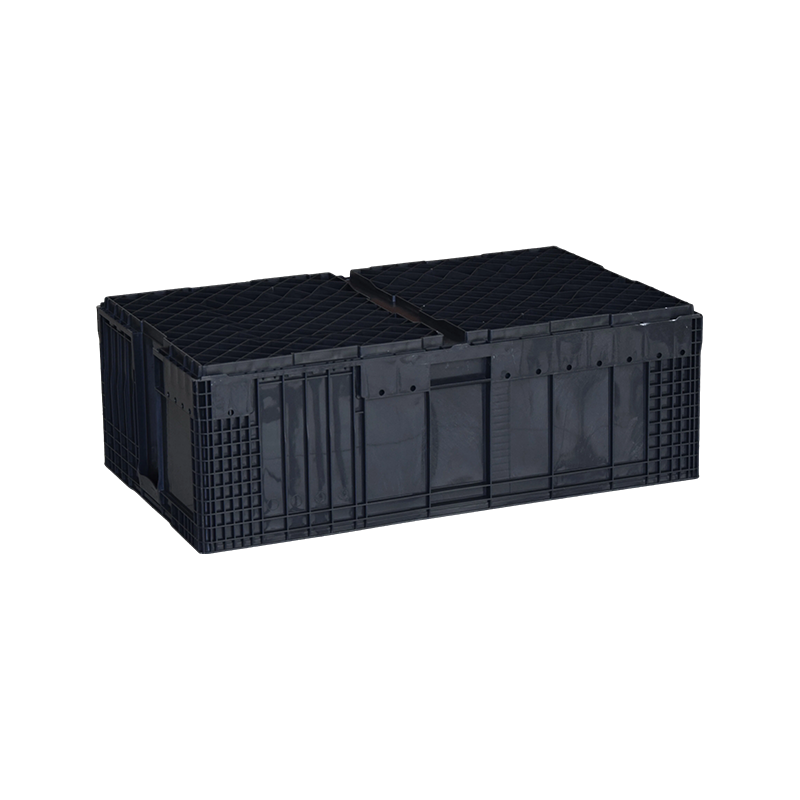
Automotive esd c-klt containers are designed for logistics environments where controlled electrostatic behavior and repeatable container handling are important. Their practical value depends on the electrical characteristics of the material, the protection provided by the complete packaging arrangement, and the requirements of the components being transported.
Manage charge generation and discharge risks.
Reduce handling damage and component movement.
Standardize storage, movement, and identification.
Electrostatic discharge occurs when accumulated electrical charge moves between objects at different electrical potentials. The event may be visible as a spark, but many discharges that affect electronic assemblies are too small to see or feel. The absence of visible damage therefore does not establish that an electronic component has remained unaffected.
Automotive electronic devices can have different sensitivities depending on their internal design, terminals, packaging, and handling conditions. A component may experience immediate functional failure after a damaging event, or it may suffer latent damage that becomes apparent only after additional operating time or environmental exposure.
Risk is not determined by the container alone. A suitable container can still be used incorrectly if operators place unprotected devices inside it, transfer parts outside an ESD protected area, or allow electrically insulating inserts to generate charge near sensitive terminals.
ESD protection is different from protection against electromagnetic interference, electrical shock, moisture, and mechanical impact. A container selected for static control should not be assumed to provide shielding, waterproofing, or cushioning unless those characteristics have been separately established.
C-KLT is a commonly used designation for a compact load carrier format within industrial small-container logistics. In automotive operations, container selection can be based on standardized handling dimensions, stackability, access, and compatibility with internal material-flow systems. The addition of ESD-related material requirements introduces another consideration: how the container behaves electrically during use.
ESD C-KLT plastic bins are intended for controlled handling of components that require electrostatic precautions. Their suitability depends on the actual material formulation, the electrical properties of the surfaces that contact the parts, and the way the container is integrated into the facility's ESD control program.
Ordinary polymers can retain electrical charge because many plastic materials have high electrical resistance. ESD-control materials are formulated to manage charge generation, charge accumulation, or charge dissipation according to their intended application. Different formulations can produce different electrical characteristics, even when the containers look similar.
A procurement specification should therefore identify measurable electrical requirements rather than relying only on a product label. Surface resistance, resistance to ground where applicable, and other relevant electrical properties should be assessed using the specified test method and conditions.
Container geometry also affects practical protection. Sidewalls, bases, handles, stacking features, and internal dividers influence how parts are loaded and moved. A stable container helps prevent uncontrolled movement, while appropriately designed compartments reduce contact between components.
For sensitive assemblies, the outer container may need to work with conductive or dissipative trays, individual component carriers, protective covers, or other approved packaging. The complete arrangement should be evaluated because a suitable outer shell does not automatically make every insert or accessory ESD safe.
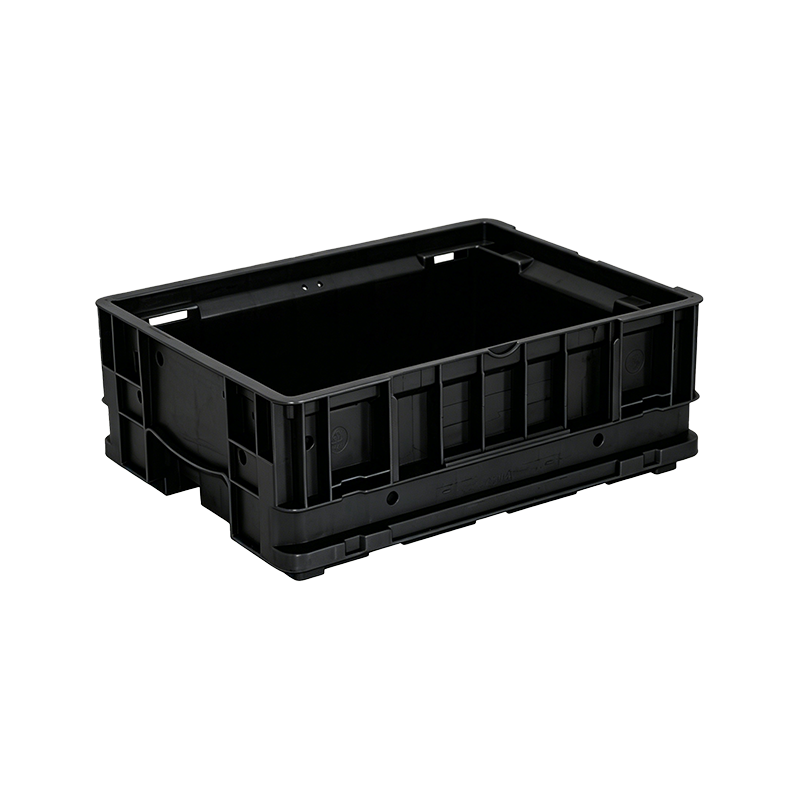
An ESD C-KLT container used as part of an automotive component handling and storage arrangement.
Material properties should match the required charge-control approach and verification method.
Base rigidity and sidewall strength should suit the intended load and handling equipment.
Dividers and trays help maintain separation and reduce unnecessary component movement.
Repeated circulation requires cleaning, inspection, and periodic electrical verification.
Not every automotive part needs the same packaging strategy. A metal bracket, a sealed electronic module, and an exposed semiconductor device have different protection requirements. The appropriate choice depends on electrical sensitivity, physical fragility, contamination limits, handling frequency, and the logistics route.
The following comparison summarizes common packaging approaches. It is a qualitative planning guide rather than a laboratory test or a ranking of specific products.
| Packaging option | Static control | Mechanical organization | Typical consideration |
|---|---|---|---|
| General-purpose plastic bin | Not established by default | Good for bulk organization | Verify electrical suitability before ESD-sensitive use |
| ESD-control C-KLT container | Depends on verified material properties | Suitable for structured logistics | Confirm the complete handling and packaging requirements |
| Conductive component tray | Depends on tray specification | Supports individual positioning | Check contact surfaces and grounding requirements |
| Shielding bag with outer container | Can provide specified discharge shielding | Depends on the outer container | Use a verified shielding package where required |
| Foam insert with container | Depends on foam and system design | Can improve cushioning and separation | Confirm foam electrical properties and particle cleanliness |
Components sealed in suitable protective packaging may have different handling requirements from bare circuit boards or exposed electronic devices. Packaging decisions should follow the component supplier's instructions and the facility's approved ESD control plan.
Static safe industrial crates are most useful when their electrical performance is known and their physical design fits the transport process. If the shipment also requires protection from impact, vibration, humidity, or contamination, these requirements should be addressed separately through a validated packaging arrangement.
Packaging assessment is easier when the team separates electrical control from mechanical, operational, and traceability requirements. The horizontal bar chart below illustrates a hypothetical prioritization exercise for an automotive electronics logistics project. Scores are illustrative planning values on a five-point scale, not measured industry averages.
Example project weighting scores on a five-point scale
Interpretation: the example team gives electrical performance the highest priority. Actual project scores should reflect component sensitivity, customer specifications, and the consequences of packaging failure.
Electrical performance should not be treated as a substitute for all other criteria. A container can meet an electrical requirement while being unsuitable for a heavy component, a sensitive surface finish, or a narrow automated conveyor. A balanced specification considers every relevant failure mode.
A reliable ESD packaging program uses defined requirements and repeatable verification. The material designation alone is insufficient because electrical performance can vary with formulation, surface condition, contamination, wear, and test conditions.
These properties are not interchangeable. A dissipative material may help limit charge accumulation but does not automatically provide the discharge shielding associated with a properly specified shielding package. Likewise, a low resistance reading from one location does not establish that the entire container has uniform electrical performance.
ESD control programs commonly refer to standards such as ANSI/ESD S20.20 for program requirements and the IEC 61340 series for electrostatic control methods. Packaging selection may also require test methods specific to packaging materials and shielding performance. The applicable document, edition, test setup, and acceptance criteria should be identified in the purchasing specification.
Standards should be applied according to their actual scope. A facility-level ESD control standard does not mean that every individual container automatically meets every packaging test. The buyer should request test evidence that addresses the intended use of the specific container and its accessories.
Reusable containers move through handling cycles that may include stacking, lifting, washing, drying, storage, and transport. These activities can affect surface condition and mechanical integrity. Labels can become unreadable, corners can crack, and residues can accumulate in areas that contact components or interfere with electrical testing.
The line chart below illustrates a hypothetical monitoring scenario in which a container's measured electrical property changes during repeated handling. It does not represent a universal deterioration curve, and the vertical values are illustrative index readings rather than resistance measurements or product test results.
Example normalized index across repeated handling cycles
The example demonstrates why repeated-use packaging may need scheduled checks. The direction, magnitude, and acceptable limits of any real measurement must be established through product-specific testing.
Inspection frequency should reflect the risk level, usage intensity, cleaning method, and historical performance of the packaging. A high-turnover production line may require more frequent visual inspections than a low-volume storage area. Electrical verification should follow the approved control plan rather than an arbitrary universal interval.
When a container fails a required check, it should be identified and removed from the applicable ESD-sensitive process until its status is resolved. Replacing a damaged label without checking the underlying material condition is not sufficient if the failure involves electrical performance.
Different stages of automotive manufacturing impose different packaging demands. The same container format may support several workflows, but the internal configuration, labeling, and handling procedures should be adjusted to the component and process.
These components may contain ESD-sensitive devices and connectors. Use approved protective packaging, control unnecessary contact, and maintain identification of part numbers, lots, and handling status.
Small sensors and modules may require dedicated compartments to prevent collisions between housings, terminals, and delicate interfaces. Select inserts that are compatible with the electrical and cleanliness requirements.
Packaging should reflect the module's mass, shape, terminal exposure, and handling restrictions. ESD controls do not replace electrical isolation, battery safety procedures, or other requirements for hazardous energy systems.
Standardized containers can simplify picking, sequencing, replenishment, and return movements. Consistent labeling and fixed part locations help reduce selection errors and unnecessary handling.
For each application, the packaging engineer should establish a clear interface between the container, internal carrier, component, and receiving process. If a component must remain inside a protective package until it reaches an ESD protected area, that requirement should be reflected in work instructions and operator training.
Static protection is most effective when it is maintained throughout the material flow. The following process diagram outlines a representative workflow for handling ESD-sensitive automotive components. Individual facilities may add inspection, quarantine, environmental monitoring, or additional approval stages.
Procurement teams often need to balance electrical requirements with mechanical durability, storage efficiency, cleaning, and process integration. A radar chart can help teams discuss trade-offs, provided the scores are treated as structured judgments rather than certified product performance.
The chart below uses hypothetical scores for two generic packaging concepts. The values illustrate how different options might be assessed; they are not measured comparisons between actual products. The chart does not establish that one option is suitable for every component or application.
Hypothetical team assessment, with higher scores indicating a stronger fit for this example
The illustrative comparison emphasizes that electrical suitability is only one part of packaging performance. Actual scores should be supported by inspection data, electrical tests, handling trials, and documented requirements.
For a formal assessment, use the same criteria and rating definitions for every candidate. Weighting can be appropriate when certain requirements are mandatory, but mandatory electrical or safety criteria should not be offset by strong scores in unrelated areas.
Automotive part storage solutions must account for container dimensions, load weight, access frequency, movement paths, and the physical characteristics of the stored components. Good packaging design minimizes unnecessary handling and makes correct handling easier to repeat across shifts and locations.
Confirm the container's approved load capacity, stacking conditions, and compatibility with the intended racking or conveying system. Loads should remain stable during lifting and transport. Excessive loading can deform a container, interfere with stacking features, or damage internal component carriers.
Stacking performance should be assessed under the conditions relevant to actual use. Static warehouse stacking, repeated forklift handling, and movement through an automated system can impose different stresses. Do not assume that a container suitable for manual handling is automatically suitable for high-speed automated equipment.
Dust, oil, loose labels, cleaning residues, and damaged surfaces may create quality problems even when the container's electrical properties remain acceptable. Establish cleaning procedures that are compatible with the container material and do not leave residues that interfere with ESD performance or component cleanliness.
Part numbers, batch information, inspection status, and handling instructions should remain readable throughout the logistics cycle. Labels and marking methods must be compatible with the material and should not create unwanted charge generation or contamination. Where electronic identification is used, validate scanner readability and data integration at receiving, storage, and production handoff points.
| Storage concern | Recommended control | Evidence to retain |
|---|---|---|
| Unstable loads | Define load limits and stacking procedures | Handling specification and inspection records |
| Contaminated surfaces | Use approved cleaning and drying procedures | Cleaning records and visual inspection results |
| Lost identification | Standardize durable labels and scanning steps | Traceability records and exception reports |
| Degraded ESD performance | Inspect and test according to the control plan | Electrical test results and disposition records |
The business case for reusable ESD packaging should be built from site-specific evidence. Potential benefits include reduced repacking, fewer handling steps, more consistent part positioning, improved identification, and lower consumption of disposable packaging. These benefits are not guaranteed simply by purchasing a particular container type.
A useful pilot measures the existing process before introducing a new packaging arrangement, then repeats the same measurements after implementation. The following chart presents an illustrative comparison of cycle times for selected logistics activities. These figures are examples for explaining the method and are not observed customer results.
Hypothetical minutes per handling cycle
Example data only. A real pilot should use measured cycle times, equivalent workloads, comparable shifts, and a clearly defined measurement period.
Any reduction in ESD-related failures should be interpreted carefully. Defect rates can be affected by component mix, operator training, environmental conditions, equipment grounding, and other process changes. Packaging improvements should be evaluated alongside these factors instead of attributing every observed change to the container alone.
Purchasing teams should convert the intended use into a documented specification before comparing quotations. This helps prevent decisions based solely on nominal dimensions, appearance, or price while overlooking essential electrical and operational requirements.
Request clear answers about the tested material, test conditions, available dimensional drawings, permitted loading conditions, and the compatibility of proposed accessories. Ask whether the supplied product is identical to the configuration used in the test report and how material or manufacturing changes are communicated.
For recurring orders, retain an approved specification and incoming inspection criteria. A replacement batch should not be assumed equivalent solely because it has the same commercial description. Changes in material formulation, colorants, recycled content, manufacturing process, or accessory design may require a technical review.
Where packaging is shared between facilities, confirm that each site follows compatible handling and inspection procedures. A container approved at one facility may still be used incorrectly at another if grounding, storage, cleaning, or protective-packaging requirements differ.
Many packaging problems arise not from the absence of an ESD label but from gaps between product specifications and real operating conditions. The following mistakes deserve particular attention during implementation.
Appearance does not establish electrical performance. Pigments and additives vary, and containers with similar colors can have different resistance or charge-generation characteristics. Verify the actual material specification and relevant test results.
Initial test results may not reflect the condition of containers after repeated handling and cleaning. A risk-based monitoring plan should address the condition of packaging throughout its expected service life.
A suitable outer crate cannot compensate for an inappropriate tray, foam insert, bag, or component carrier. Every contact surface and relevant packaging layer should be evaluated as part of the complete system.
Charge dissipation and protection from external electrostatic discharge are different functions. Where shielding is required, specify and verify a suitable shielding package instead of assuming that a dissipative crate provides equivalent protection.
Reusable packaging may circulate through several warehouses and production sites. Without clear inspection, cleaning, identification, and quarantine procedures, damaged or unverified containers can return to sensitive operations.
A documented packaging process should define who approves a container, who inspects it, how failed items are isolated, and what evidence is required before an item returns to service.
Reusable packaging can reduce dependence on disposable materials when container durability, return logistics, cleaning, and reuse rates are managed effectively. However, reuse alone does not establish an environmental benefit. The result depends on the number of successful trips, transport distances, cleaning resources, damage rates, and the eventual treatment of retired containers.
A lifecycle assessment should use actual operating data wherever possible. Useful measurements include the number of trips completed before retirement, the percentage of containers returned, cleaning energy and water use, repair frequency, and the transport burden associated with reverse logistics.
Procurement teams should also consider repairability and end-of-life arrangements. If containers become electrically nonconforming or mechanically damaged, their status should be recorded and their use restricted according to the approved procedure. A container that is no longer acceptable for ESD-sensitive work should not be returned to that process merely because its outer structure remains intact.
For a well-managed program, packaging specifications, operator training, inspection records, and logistics planning should be reviewed together. This creates a repeatable system in which electrical protection, physical handling, traceability, and reuse objectives support one another.
Automotive ESD C-KLT containers are reusable industrial logistics containers intended for applications requiring controlled electrostatic behavior. Their suitability depends on verified material properties, the packaging configuration, and the ESD requirements of the components being handled.
Potential applications include electronic control units, circuit assemblies, sensors, communication modules, and selected power electronics. The actual packaging requirement should follow the component specification and the manufacturer's ESD handling instructions.
No. Different components have different sensitivities and physical protection needs. Some require individual carriers, shielding bags, specialized inserts, or additional environmental protection. The complete package should be evaluated against the intended application.
Dissipative materials are intended to manage charge accumulation and movement. Shielding packaging is designed to reduce the electrostatic discharge exposure of enclosed items. These functions are not interchangeable, so the required protection level must be specified and verified.
Request the material specification, applicable test methods, measured results, environmental conditions, and acceptance criteria. Verify that the evidence corresponds to the supplied configuration and establish a suitable incoming inspection and periodic verification plan.
Yes. Inspection should address cracks, deformation, contamination, damaged labels, and other conditions that could affect performance. Electrical testing should be scheduled according to the risk assessment, usage conditions, and approved ESD control plan.
Not simply by changing its label or adding an unverified coating. Any modification must be evaluated for electrical performance, durability, compatibility with the component, and compliance with the applicable specification. A modified container should not enter an ESD-sensitive process without approval.
Include the container format, dimensions, load requirements, electrical criteria, test methods, approved accessories, cleaning requirements, identification rules, expected reuse conditions, and incoming inspection requirements. Define how material changes and nonconforming containers will be managed.
No. Containers are one element of an ESD control program. Personnel grounding, work surfaces, handling procedures, grounding arrangements, and other applicable controls remain important. Packaging does not replace the facility's required electrostatic discharge precautions.
Run a controlled pilot using defined baseline measurements. Compare handling time, packaging damage, traceability errors, ESD-related exceptions, cleaning effort, and return-cycle performance. Document other process changes so that observed improvements are not incorrectly attributed to packaging alone.
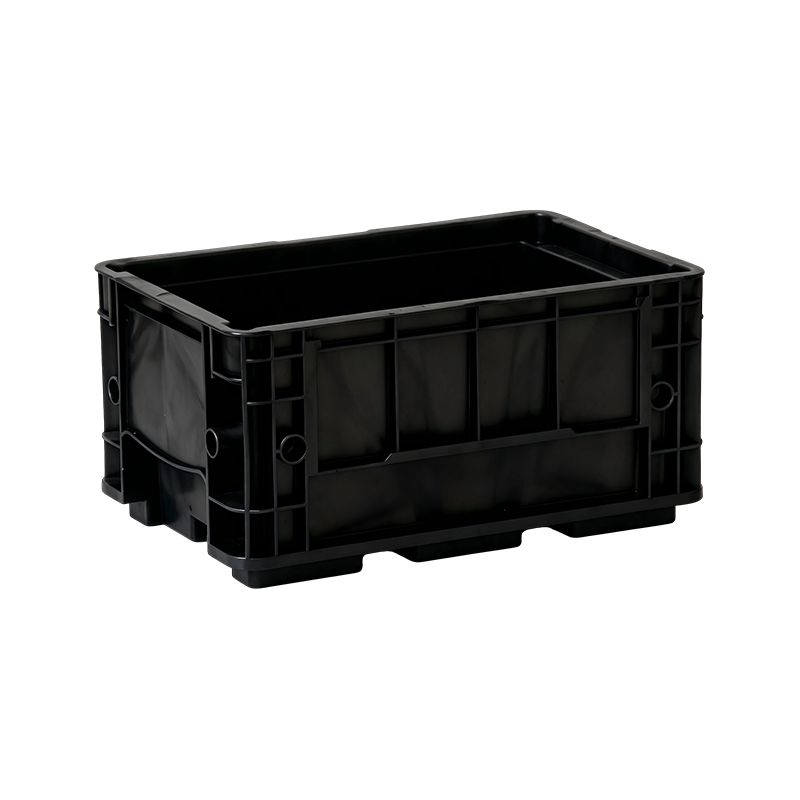 ESD-R-KLT3115 Anti-static Plastic Bins for Workshop Parts Handling & Circulation

Copyright © Suzhou He Cheng Feng Esd Circulation Box Co., Ltd.
All Rights Reserved.Custom Reusable Automotive Plastic Containers Suppliers
